
Resident Shorebirds and Waders – 9 September 2025
Two large pontoon boatloads of enthusiastic photographers had a perfect morning for an outing at the Noosa River Estuary to learn about the shorebirds and take photographs. There were lots of powerful lens, so fabulous images were produced.
Many photographers belong to the InFocus group at Coolum. Russ Lamb was our bird expert, he is an ‘in-charger’ for the monthly bird survey and monitoring, which has been carried out for nearly 20 years. He imparts his knowledge in an easy enjoyable manner.
As well as resident shorebirds, some migratory birds are arriving for our summer, so that was a bonus. Participants disembarked on the Sand Island and then walked along the shoreline, where they could observe congregating shorebirds, to the little bay that has developed since the Sand Island and North Head have been connected.
We were initially disappointed with the bird variety, but the final checklist was impressive 25 species. They are:Beach Stone Curlew, Pied Oyster Catcher, Pacific Golden Plover, Eurasian Whimbrel, Red Capped Plover, Silver Gull, Great Crested Tern, Australasian Darter, Pied Cormorant, Little Black Cormorant, Australian Pelican, Little Egret, Great Egret, Australian White Ibis, Whistling Kite, Brahminy Kite, Eastern Osprey, White Bellied Sea-eagle, Mangrove Gerygone, Torresian Crow, Welcome Swallow, Brown Honeyeater, Striated Pardalote, Little Corella, Rock Dove.
This event was supported by a Qld Govt Engaging Science grant.
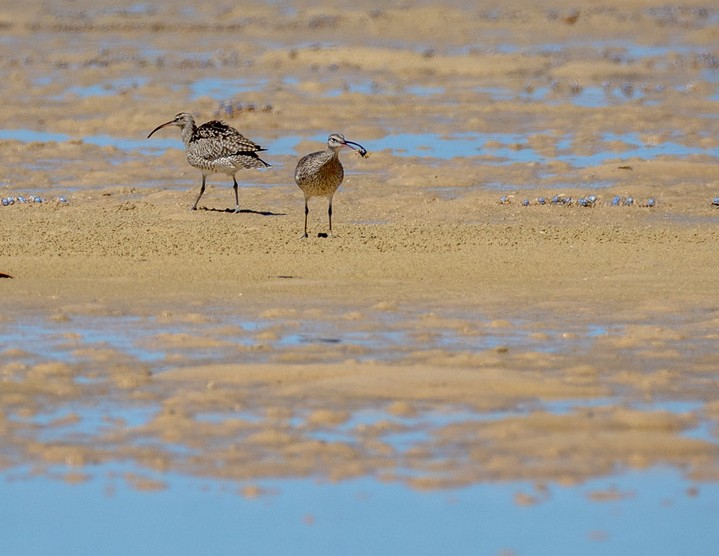
Wimbrel
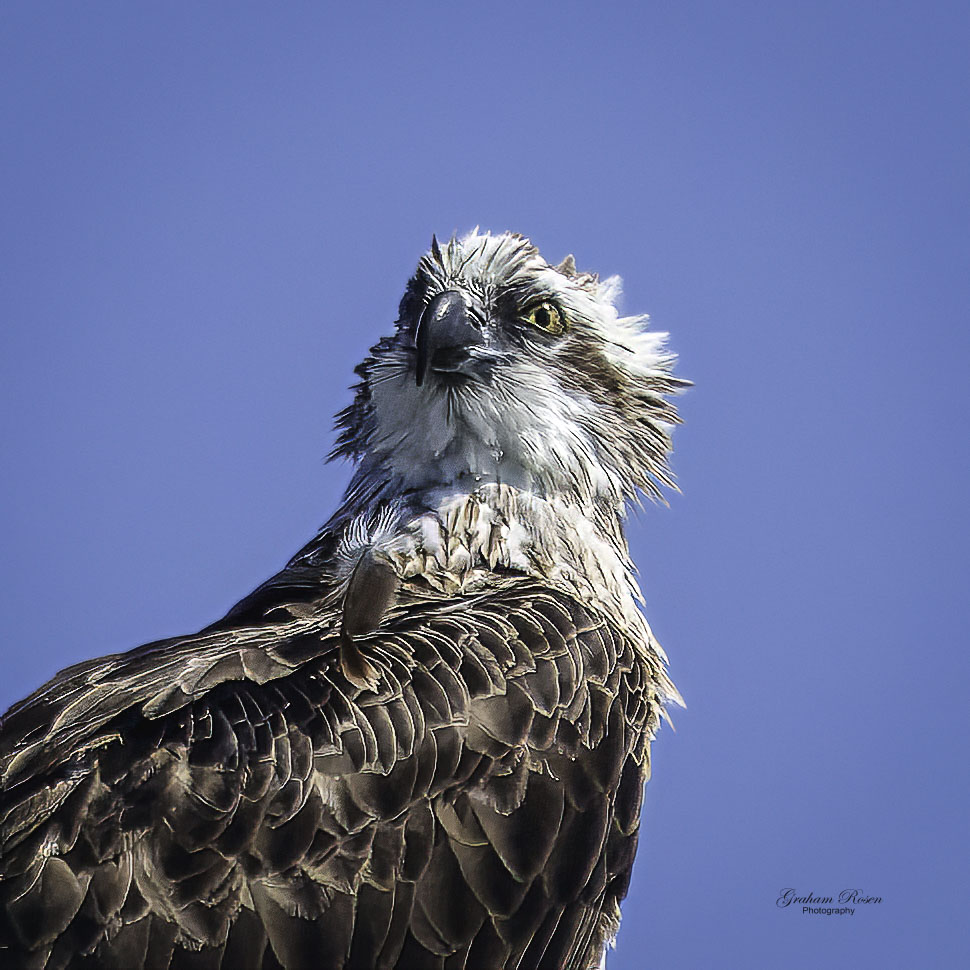
Osprey
Wimbrel eating a soldier crab
Event 6 is Coming! Join us!
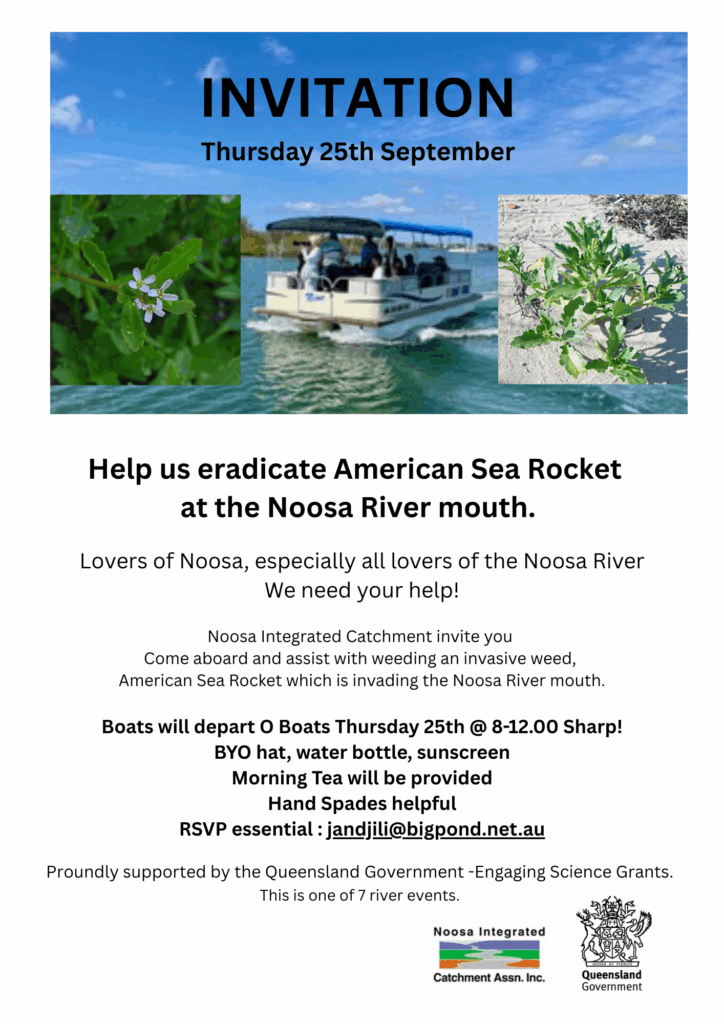
We discovered and were horrified at the extent of an infestation of invasive introduced weed, American Sea Rocket which has been spreading over the ‘spit.’
Because of the imminent arrival of migratory birds, after which the Sand Island and its ‘spits’ are ‘no go’ areas between October – April, we have organized a ‘blitz,’ next week on Thursday 25 September.
We need as many volunteers as possible, and even then, it is going to be a challenge to remove it in one morning. Sand builds up around the stems, so even small plants can be held tightly but the sand. All dropped leaves need to be bagged. It might be hot working in the open, but volunteers can enjoy refreshments sitting in the shade on the pontoon boats, whenever they feel like it.