
Project Description
Our project “Tread Lightly” funded by a Queensland Government Engaging Science Grant involves a series of half-day field trips, each with a different theme and target participants, on the river estuary, its islands and on land.
Topics include Migratory Shorebirds, Resident Shorebirds, History of Noosa Islands and their importance to the Lake Systems, Salt Marshes, Mangroves, Marine Life, Tidal ecosystems, Seagrass, Flora of Sheep and Sand Islands, Erosion, Pollution, Plastic microparticles, American Sea Rocket, Cranks Creek flora.
No 1. Shorebirds of the Noosa River
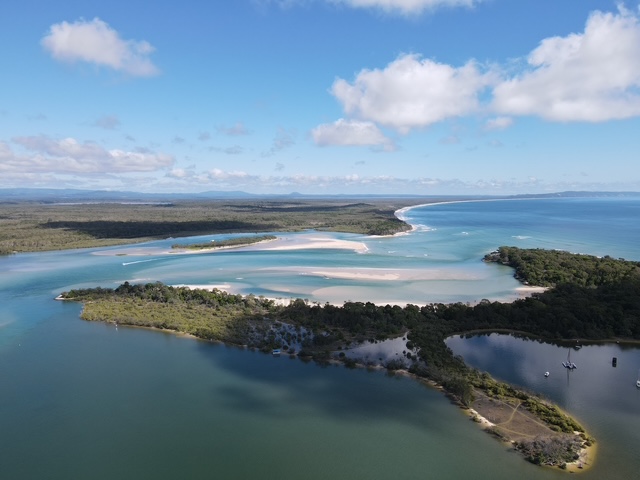
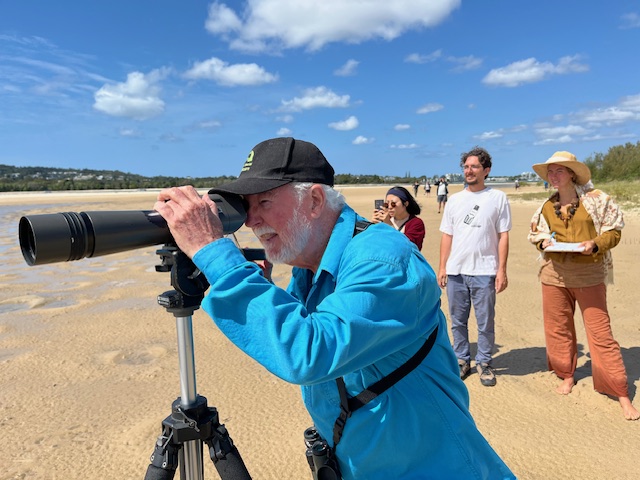
Monday 17th March 2025. After postponing our event due to Cyclone Alfred, on a perfect Noosa morning, we were finally onboard two ‘O’ Boats, under the expert and knowledgeable guidance of Russ Lamb, supported by John Bloomfield. We learnt about the amazing migratory Shorebirds who fly from Alaska and Siberia for our summer and how critical to their return journey are Sand Island and its sand-spits in the Noosa River estuary. It is so important that disturbances by boats, people, dogs must be kept to a minimum. We learnt how to ID the different Shorebird species and the ‘theory’ of how to count them. That is not something to master without LOTS of practice, even with a large Scope and Binoculars.
No 2. Sheep Island
On 17th April, 20 volunteers from Noosa Parks’ Botany Group, NICA and Noosa Bush Beach and Creek Care, went on 2 pontoon boats to Sheep Island Conservation Area. Sheep Island is between Makepeace and Goat Islands. Under the excellent leadership of endemic vegetation experts Robert Price and Joan Heavey, the team surveyed 12 ha of Sheep Island, recording species as they went. Previously, there wasn’t a species list. Species documented by the group included: 12 trees; 5 mangroves; 5 shrubs; 2 ferns; 5 vines, 16 herbs, grasses and sedges, 2 mistletoes and 13 weed species. There were 6 kangaroos.
No 3. Sand Island
On 29 April, 22 volunteers went on 2 pontoon boats to Sand Island in the Noosa River Estuary. Sand island and its associated sand spits are critical habitat for both migratory (from Alaska and Siberia) and resident shorebirds. NICA volunteers have been successfully rehabilitating the island by removing invasive weeds since 2010. The island is off limits between October and the beginning of April. Noosa Council had contractors dredge and realign the river estuary to try and restrict erosion, so we looked at the effect that has had on the island and its vegetation and it joins North Shore, the risk to bird life from foxes and dogs. We discussed the importance the Mangroves and Saltmarsh but did not walk among them as resident shorebirds were nesting. A four-page hand out was emailed to the participants, prior to our visit.
No 4. History of the Noosa River Islands
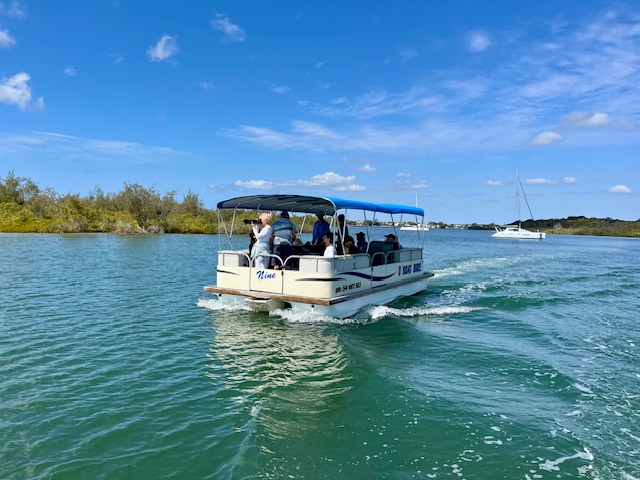
We had planned this trip as a World Environment Day activity, aligning with the SCEC program (sadly cancelled). So instead on 27th June, on a freezing, drizzly day, 15 of us huddled on the boat and had lively and good discussions about the 7 islands and their uses to early settlers and importance to the estuary for erosion control.
How Pig and Sheep Islands were declared wildlife sanctuaries in 1934 in response to public demand to protect wildlife. This followed an open season on Koalas in 1927, when nearly the entire population of koalas was wiped out. Weyba Island 11.5ha; Keyser 19ha; Goat 20ha; Sheep 12.5ha; Makepeace (originally Pig) 12ha; Sand Island 3ha; and Ross Island (which had a market garden and became part of Noosa Sound).
Other topics included; how Mullet caught in Lake Weyba were barrowed to the Gympie goldfields, particularly Stingrays in Lake Weyba, Black Swans which feed on seagrass, animals and birds dependent on the islands and the estuarine ecosystems, mangroves, saltmarsh, seagrass, reestablishment of oyster reefs, water quality testing.
No 5. Resident Shorebirds and Waders
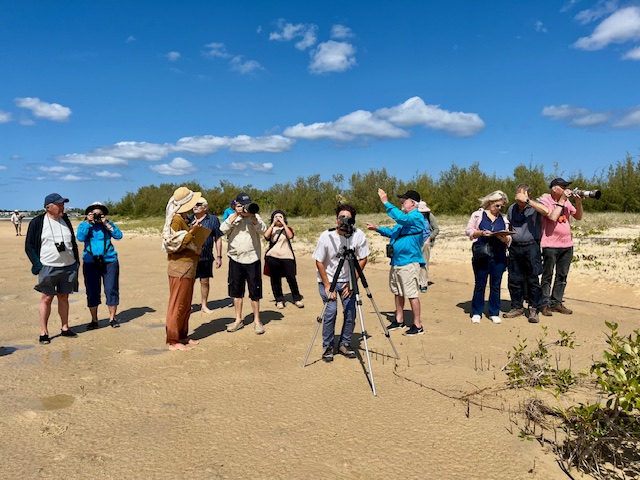
On 9th September 2025 two large pontoon boatloads of enthusiastic photographers had a perfect morning for an outing at the Noosa River Estuary to learn about the shorebirds and take photographs. There were lots of powerful lens, so fabulous images were produced. Many photographers belong to the InFocus group at Coolum. Russ Lamb was our bird expert, he is an ‘in-charger’ for the monthly bird survey and monitoring, which has been carried out for nearly 20 years. He imparts his knowledge in an easy enjoyable manner.
As well as resident shorebirds, some migratory birds are arriving for our summer, so that was a bonus. Participants disembarked on the Sand Island and then walked along the shoreline, where they could observe congregating shorebirds, to the little bay that has developed since the Sand Island and North Head have been connected.
No 6. Invasive American Sea Rocket blitz on the newly formed spit
At our Sand Island ‘event’ in May, some volunteers had noticed outlier patches of invasive American Sea Rocket, Then NICA River Rangers later reported an infestation colonizing the newly formed sand spit. This spit resulted from changes in the river mouth adjoined Sand Island. The shorebirds were now also using it. So, with multimedia, we promoted a blitz on American Sea Rocket Cakile edentula. Sand Island is off limits October to April, so the timing was critical.
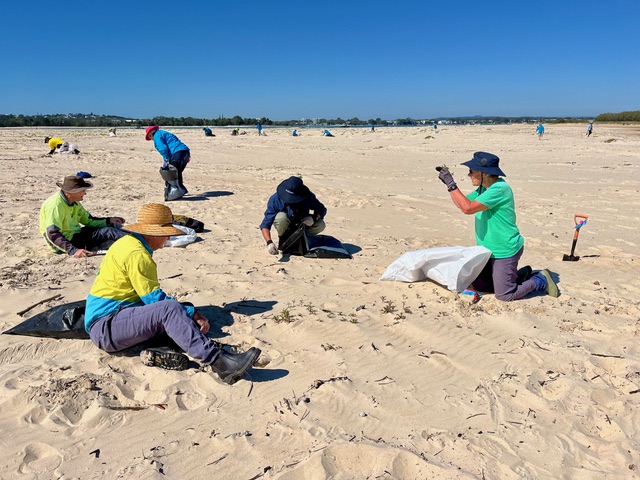
On a very hot 25 September, out in the open, 33 volunteers came by Pontoon boats, kayak and canoes and learnt why it is a problem and how to remove it. Then did a mighty job over half of the 6 ha removing thousands of plants, many seeding.
The timing was perfect as the situation would have been dire, because American Sea Rocket is allelopathic. It’s a non-native, invasive succulent, heavy seeding weed species particularly in coastal environments like the strandlines, foreshores and dunes. It releases substances into its root zone that can stunt or deter the growth of other plants, contributing to its success and dominance in a new environment. Native plants form critical habitat (food, shelter and/or nesting) for “Sand Island” and its sand spits (for resident and Migratory Shorebirds which fly from Alaska and Siberia each year along the East Asian-Australasian Flyway. The flyway is a critical pathway for over 50 million migratory waterbirds. Its conservation involves international cooperation and protection of important wetlands across 22 countries. The migratory birds are in Noosa Estuary between October and early April. NICA volunteers have been monitoring the shorebirds each month for 20 years.
No 7. American Sea Rocket Blitz 2
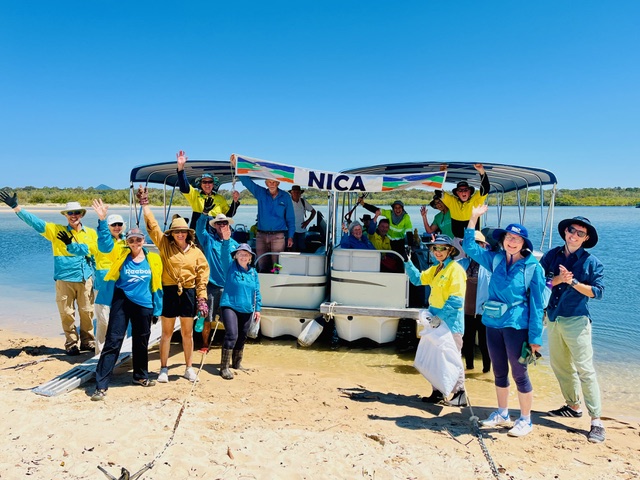
On 9 October, with the migratory birds beginning to arrive, resident shorebirds beginning to nest on the newly formed sand spit adjoining Sand Island AND the invasive American Sea Rocket taking no prisoners, we organized ‘Event 7’ hard on the heels of No 6, or we would run out of time. More promotion and another 35 volunteers attacked the remaining half. It was a stifling hot day with no shelter except back the pontoon boats for a well-earned morning tea.
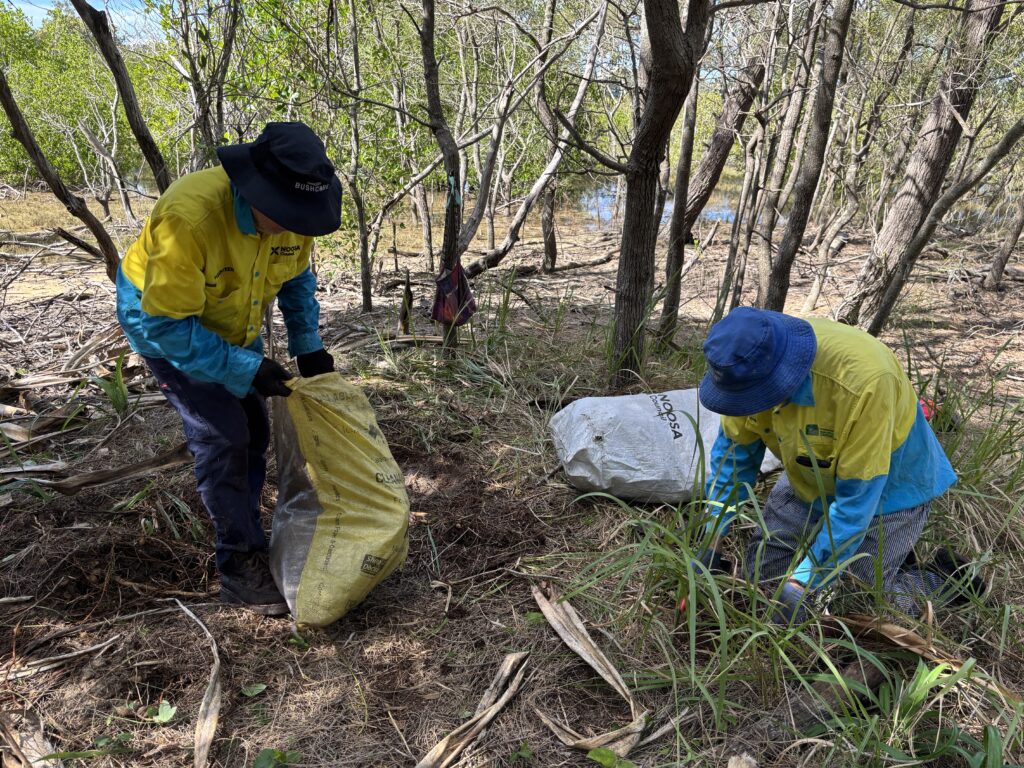
Our activities were highly successful. It was hard, hard work dragging the heavy bags of weed from the far end of the Spit, back to the boat. The result was very rewarding. All the volunteers learned much about weed species and the good guys as well.
No 8. Woods Bay Saltmarsh
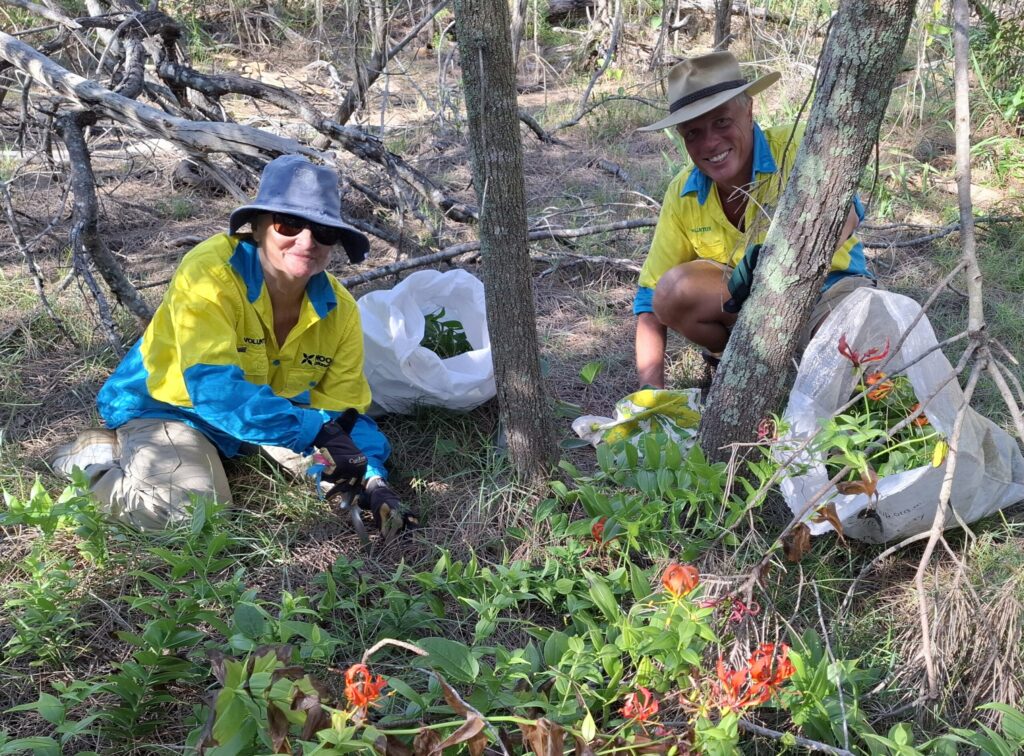
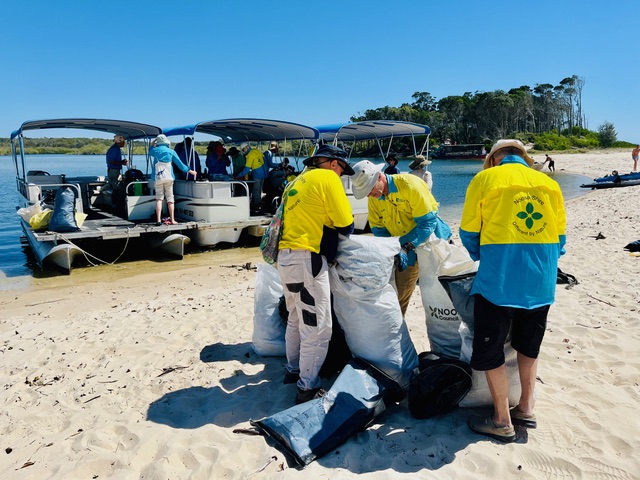
19 February 2026 This event was a perfect example of what happens with tides and saltmarshes and, also the damage encroachment from invasive weeds can cause to the integrity of the saltmarsh. A full pontoon boatload of serious weeders went to experience this first hand. Klaus came with the drone to record the activities. We crossed the saltmarsh as the tide was coming in, but fairly quickly, had to move the boat to the Doggy Beach side, so we could more easily move the bags heavy with wet weeds. At the saltmarsh edge there is a serious infestation of seeding Asparagus with hundreds of seedlings in among the casuarina needles, Corky Passion up and over the fragile trees and Gloriosa Lily in flower and seeding. It amazed us that the weeds are so salt tolerant. We only had 4 hours, and will need to organize another trip very soon. The tide changed… and the boat was high and dry, so we unloaded the heavy bags and enlisted the help from dog walkers and their dogs to get us floating. We learnt, did good work and had fun. Perfect morning.