

On Tuesday, 4 November 2025, NICA members and guests were treated to a rare behind-the-scenes look at one of Noosa’s most essential — yet often overlooked — pieces of infrastructure: the Noosa Wastewater Treatment Plant.
As part of our ongoing commitment to integrated catchment management, this guided tour offered a fascinating insight into how wastewater treatment safeguards our waterways, supports public health, and supports our community’s resilience during storm events.
The group was warmly welcomed and expertly guided by Unitywater’s Treatment Plant Operator Simon Coobula, alongside Lesley McAllister and Madeline Petrie. Their knowledge and enthusiasm made the complex processes both accessible and engaging.
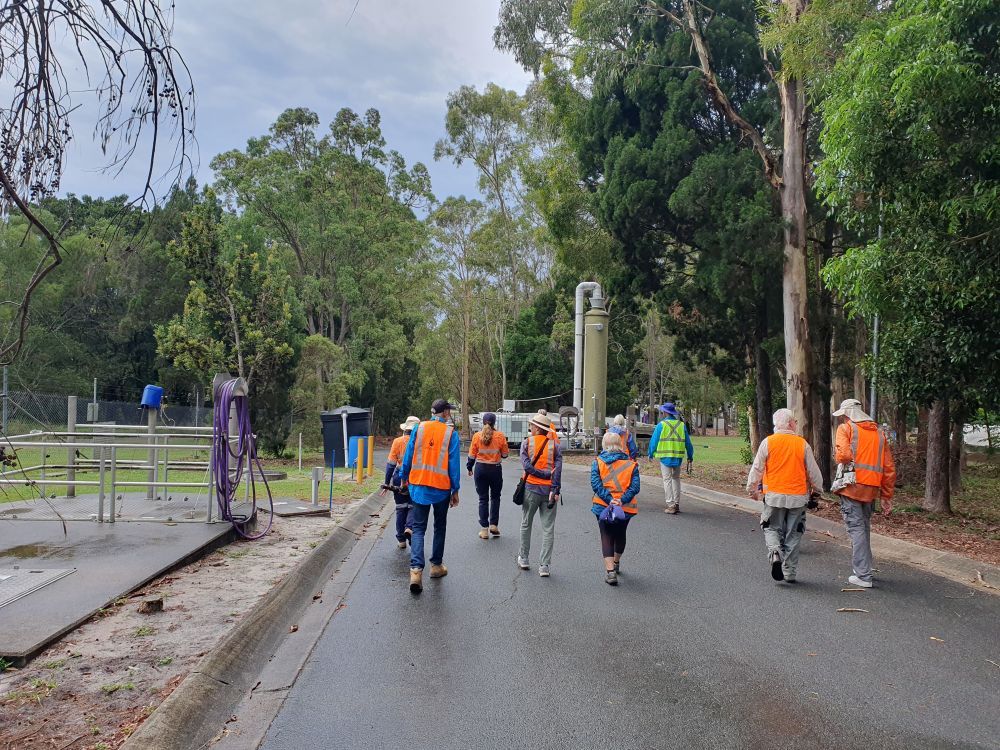
From Flush to Flow: The Journey of Wastewater
The Noosa Wastewater Treatment Plant serves a wide catchment area, receiving wastewater from homes stretching from Marcus Beach in the south to Tewantin in the west. It also treats leachate from the Noosa landfill and trade waste from local businesses such as food outlets and mechanics.
The tour followed the path of wastewater through the plant, starting at the inlet screens, which trap larger debris. Approximately two large skip bins worth of waste material are collected and taken to landfill each week. Small items like plastic earbud stems can slip through screens and cause issues further along the treatment process. Madeline highlighted the importance of only flushing the “three Ps” pee, poo, and (toilet) paper.
With the Noosa WWTP being closely located to homes and community facilities, another crucial step along the journey is to minimise odours being emitted. The plant uses biological treatment with pH control to maintain the optimum environment for the bacteria.
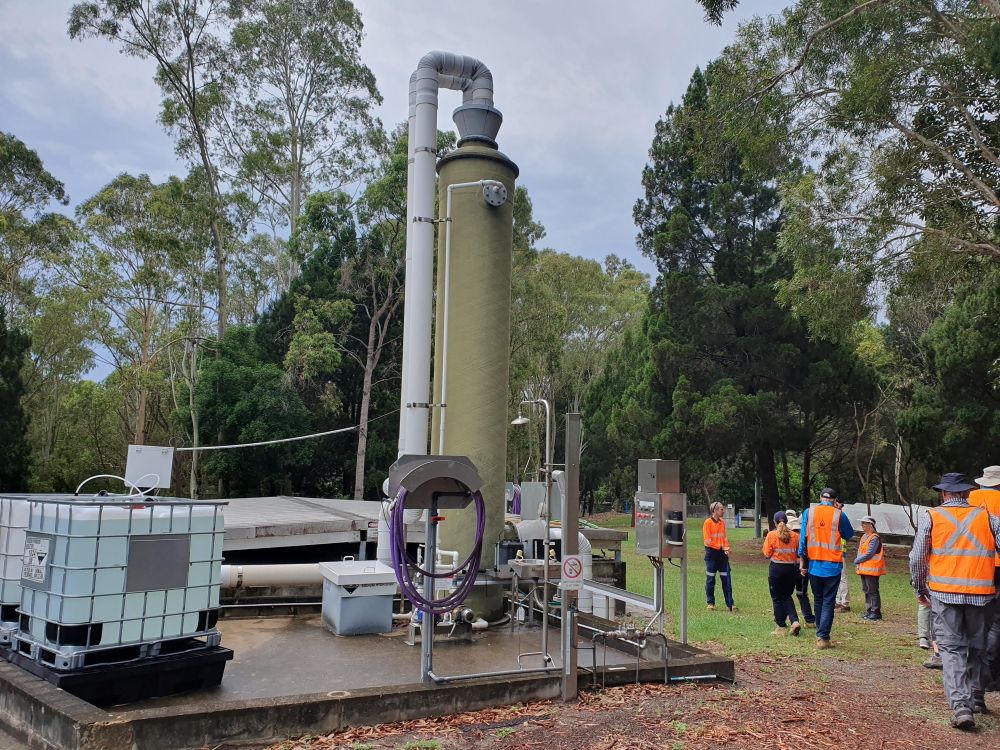
Next step is the bioreactors, which Simon referred to as “Noosa’s premier resort for bacteria”. Here, beneficial microbes break down organic matter in a carefully balanced environment. The bacteria eat all the carbon and reduce the amount of phosphorous and nitrogen that can impact the health of our waterways.
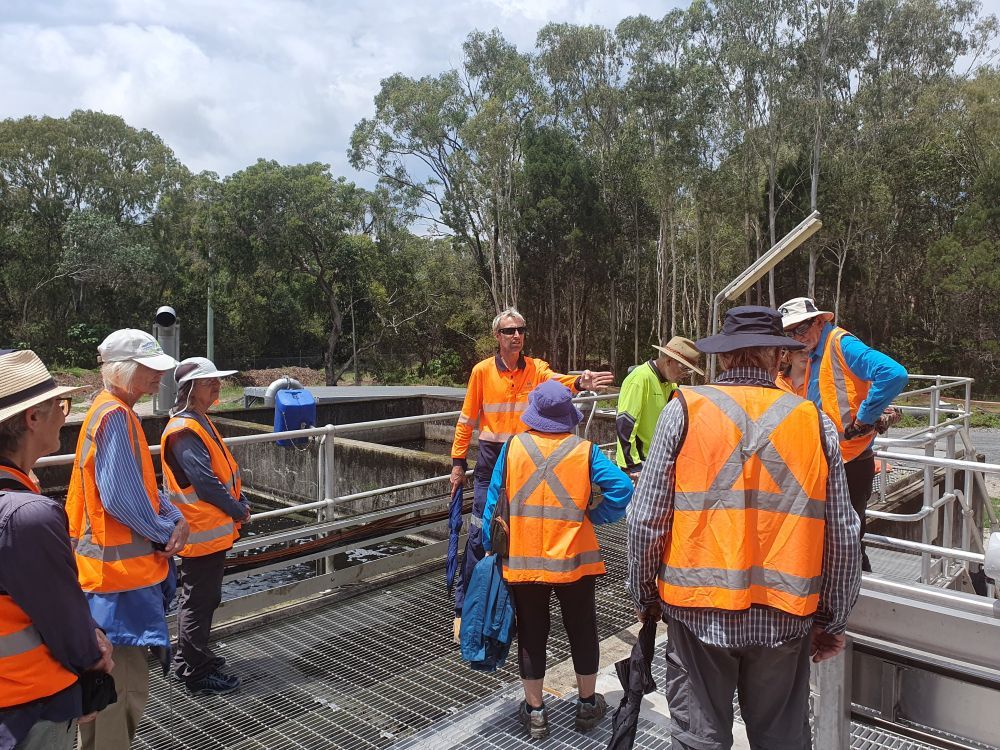
The water then moves to a clarifier, separating solids from liquids. Solids are sent to an aerobic digester, while the liquid returns to the bioreactor for further treatment.
After this, the water is gravity-fed through four sand filters and undergoes ultraviolet (UV) disinfection — a critical step that neutralises pathogens before the clean water is safely released into Burgess Creek, or put to beneficial reuse as recycled water for irrigation by nearby Noosa Springs Golf Course and other authorised users.
The final step in journey is for the remaining solid waste to be processed through a belt press to remove moisture. This reduces the weight of the nutrient-rich biosolids before it is collected by truck to be used in agriculture, composting and land rehabilitation.
Investing in the Future
Unitywater is currently undertaking vital renewals and maintenance works to ensure the plant continues to deliver safe, reliable wastewater services for Noosa’s growing population. These works will enhance the plant’s capacity during storm events and ensure long-term service delivery.
Stage one of the upgrade is complete, with stages two and three scheduled through 2025 and 2026. Improvements include structural renewal of concrete slabs and pits, installation of new pipes and fittings for wet weather bypass, and construction of a new switch room and UV system — all within the existing plant footprint.
This tour was a powerful reminder of the invisible systems that protect our environment and health every day. It also underscored the importance of community awareness and responsible waste disposal.
NICA thanks Simon, Lesley, and Madeline for their time and expertise, and Unitywater for their continued investment in sustainable infrastructure. Together, we’re working toward a cleaner, more resilient Noosa catchment.