

As many of you would know, NICA has been running the Riverwatch program for many years. Teams of between 2 and 5 volunteers go on the river collecting rubbish from the banks of the river, creeks and lakes. The frequency varies from every week, every fortnight, or once a month, depending on the number of volunteers available. Roger Kelly is currently in charge of the roster.
It is suggested that volunteers wear protective footwear, a hat, a long sleeved workshirt (ones with the NICA logo are available from the office) and bring drinking water. All volunteers are asked to sign the Risk Assessment sheet at the start of each run.
A typical trip usually lasts 3 hours, and the areas that are visited are sometimes tide dependent. The area covered is from the Eenie Creek Bridge on Weyba Creek to Lake Cooroibah. A spot where we always find some rubbish is under Garth Prowd Bridge.
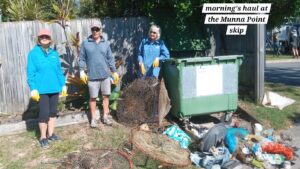
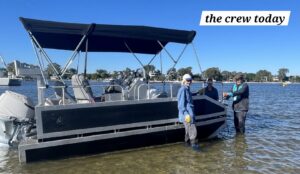
A record sheet is kept for each trip, and a summary is distributed to all volunteers, and anyone else who is interested. The amount of cans, bottles, crab pots, clothing, plastic, fishing gear etc that is collected is listed. At the completion of each trip, the litter is left in a skip near the Coastguard Office at Munna Point. We normally take a photo of the morning’s collection before we put it in the skip. Large items are left beside the skip, for Council contractors to collect later. If the skip is full, the Council officer responsible is notified.
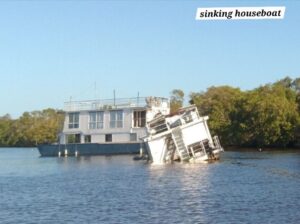
The location and photos of sunken or half sunken boats are also recorded, particularly if they are tied to mangroves or above HWM. Anything that is deemed to be a hazard to navigation or is leaking oil or fuel. is reported to MSQ.
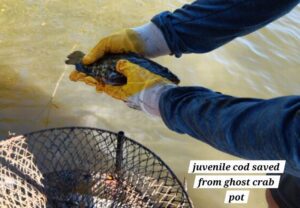
Unless a crab pot is damaged beyond repair, we are not allowed to remove them, even if they do not have the required contact details on the pot itself, and the float. In these cases, we report the location etc to Boating and Fisheries so they can take appropriate action. This is unfortunate sometimes, as many pots are obviously abandoned, but are still active. Ghost pots can catch a lot of unintended marine creatures. The photo shows one of these pots which contained a juvenile Estuary Cod. These fish can grow to 2.1m and a weight of 230 kg. We released this one, but there are many more such crab pots in the Noosa River just waiting for more victims.
Wildlife is also recorded, particularly raptors, shorebirds and waders, if we can identify them.
Most of us are aware of the problem of soft plastics in the marine environment, which is why we try to collect as much as possible. Bait bags are a particular bugbear. We have all seen the photos of turtles that have swallowed plastic bags, mistaking them for jelly fish. However hard plastics are just as bad. A recent study on Lord Howe Island is alarming. This island is home to about 500 humans and 44000 shearwaters, or mutton birds. Over the last 18 years, researchers have found that the amount of plastic in their bellies has been increasing year by year. In May this year, a bird was found and almost a fifth of its body weight was plastic. The birds are telling us we need to do more. We are not winning the war on waste. We have to concentrate on the “front end” where the plastic gets made, not where it gets spat out. We just can’t recycle enough. However, we will try to do our small bit in the Noosa River.
Thankfully the RiverWatch teams have seen a reduction in the number of abandoned tents, camping equipment, furniture, bedding, camp fires, etc recently, so hopefully that trend continues.
Hopefully this summary will give some people a bit of an idea of the work that the NICA volunteers have been doing on the river for 25 years. Of course there are also other ongoing activities such as the water monitoring program, but that can wait for a future report.
This program is supported by a grant from Noosa Council.